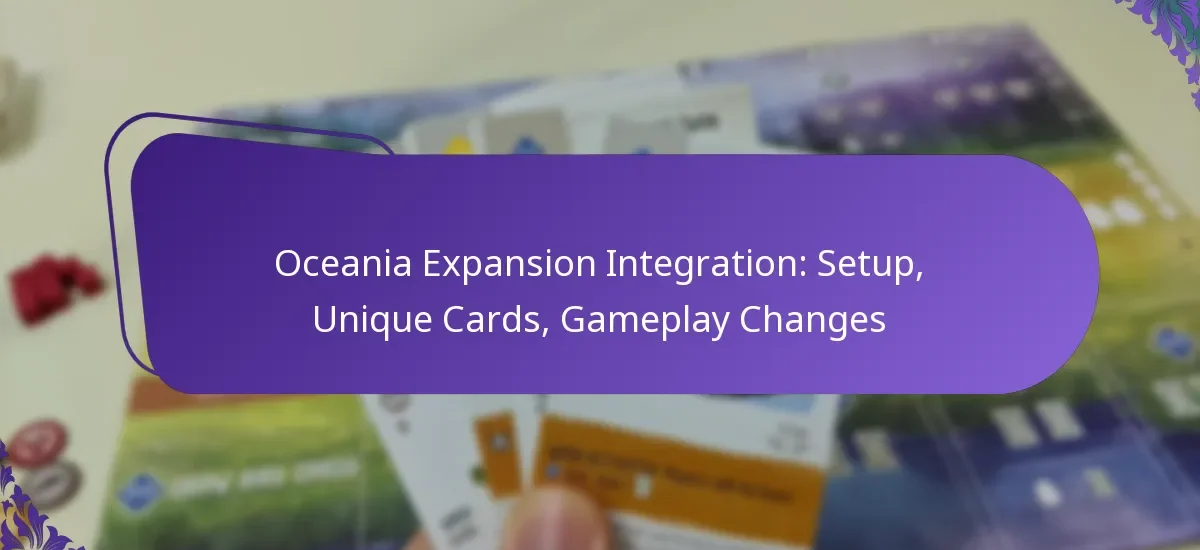
The Oceania expansion enhances your gaming experience by integrating new components and adjusting gameplay elements for a smoother setup. With the introduction of unique cards that offer fresh abilities and strategic options, players will encounter new challenges and opportunities. Additionally, significant gameplay changes bring about new rules and mechanics, fostering dynamic interactions and a revamped approach to resource management and competition.
How do I set up the Oceania expansion?
Setting up the Oceania expansion involves integrating new components and adjusting gameplay elements to enhance your experience. Follow the steps outlined below to ensure a smooth setup and avoid common mistakes.
Required components for integration
To successfully integrate the Oceania expansion, you will need the following components:
- Oceania expansion board
- New unique cards
- Additional resource tokens
- Updated rulebook
- Player boards (if applicable)
Ensure that you have the base game as well, as the expansion is designed to work in conjunction with it. Each component plays a crucial role in the new gameplay mechanics introduced in Oceania.
Step-by-step setup instructions
- Begin by removing the existing game board and replacing it with the Oceania expansion board.
- Shuffle the new unique cards and place them in a draw pile accessible to all players.
- Distribute the additional resource tokens according to the instructions in the updated rulebook.
- Set up player boards, ensuring each player has access to the new components.
- Review the new rules and mechanics as a group before starting the game.
Following these steps will help you set up the game efficiently. Make sure to double-check that all components are included and correctly placed.
Common setup pitfalls to avoid
One common pitfall is neglecting to shuffle the unique cards properly, which can lead to an unbalanced game. Always ensure that cards are well-mixed before play begins.
Another mistake is not reviewing the updated rules thoroughly. Some mechanics may differ significantly from the base game, and misunderstanding them can disrupt gameplay.
Lastly, players often forget to distribute the new resource tokens evenly, which can create disparities among players. Take your time to ensure everyone has the same starting resources.
Compatibility with previous expansions
The Oceania expansion is designed to be compatible with earlier expansions, but certain mechanics may interact differently. Always consult the updated rulebook for guidance on how to integrate elements from previous expansions.
For example, if you are using the Oceania expansion alongside the previous expansions, be mindful of how resource management changes with the new cards and tokens. Adjust your strategies accordingly to accommodate these differences.
Players should also be aware that some unique cards may replace or modify existing cards from previous expansions, so it’s essential to clarify these changes before starting the game.
Game board adjustments
The game board in the Oceania expansion features new territories and resource locations that change how players interact with the environment. Familiarize yourself with these new areas as they can significantly impact strategy.
Additionally, the expansion introduces new pathways and connections between territories, which may alter movement strategies. Understanding these adjustments can provide a tactical advantage during gameplay.
Finally, be aware that the expansion may include new scoring opportunities based on the updated board layout, so players should adapt their strategies to maximize their points effectively.
What unique cards are introduced in the Oceania expansion?
The Oceania expansion introduces a variety of unique cards that enhance gameplay by adding new abilities and strategic options. These cards are designed to integrate seamlessly with existing mechanics while providing fresh challenges and opportunities for players.
Overview of unique card types
The unique cards in the Oceania expansion can be categorized into several types, including resource cards, event cards, and character cards. Each type serves a specific purpose and introduces new dynamics to the game.
Resource cards allow players to gather and manage new types of resources, which can be crucial for advancing their strategies. Event cards trigger specific effects that can alter the game state, while character cards introduce unique abilities that can influence gameplay significantly.
Understanding these card types is essential for maximizing their potential and integrating them into your overall game strategy.
Abilities and effects of new cards
The new cards come with various abilities that can impact gameplay in different ways. For instance, some resource cards may provide bonuses when certain conditions are met, while event cards can create temporary advantages or challenges for all players.
Character cards often feature unique abilities that allow players to perform actions that are not possible with standard cards. These abilities can include manipulating the turn order, gaining additional resources, or even altering the effects of other cards.
Players should carefully consider how to utilize these abilities to gain an edge over their opponents, as timing and strategic placement can be critical.
Strategies for using unique cards
- Prioritize resource cards that complement your current strategy to enhance your overall efficiency.
- Use event cards strategically to disrupt opponents or to create advantageous situations for yourself.
- Leverage character cards to fill gaps in your strategy, especially when facing specific challenges from opponents.
- Combine abilities from different card types to create powerful synergies that can turn the tide of the game.
Experimenting with different combinations of unique cards can lead to innovative strategies that surprise opponents. Always be aware of the potential counterplays your opponents might employ against your strategies.
Comparative analysis with existing cards
When comparing the unique cards from the Oceania expansion to existing cards, it’s clear that they offer enhanced versatility and new strategic layers. While traditional cards often focus on straightforward resource management, the new cards introduce complexity that can lead to more dynamic gameplay.
For example, whereas existing resource cards might provide a fixed amount of resources, the new cards can offer variable bonuses based on game conditions, making them more adaptable. This shift encourages players to think critically about their card choices and how they interact with the evolving game state.
Players familiar with existing cards should assess how these new options can complement or replace their current strategies for optimal effectiveness.
Visual examples of unique cards
Visual representations of the unique cards can help players understand their abilities and effects more clearly. For instance, a resource card might depict a lush tropical landscape, symbolizing its ability to generate additional resources when specific conditions are met.
Character cards often feature distinct artwork that reflects their unique abilities, making them easily recognizable during gameplay. Event cards might include dynamic illustrations that capture the essence of their effects, providing a visual cue for players.
Utilizing these visual elements can enhance player engagement and make it easier to remember the unique capabilities of each card during the game.
What gameplay changes come with the Oceania expansion?
The Oceania expansion introduces significant gameplay changes that enhance player experience through new rules, unique mechanics, and adjustments to strategy and scoring. Players can expect a more dynamic interaction and a fresh approach to resource management and competition.
New rules and mechanics
The Oceania expansion adds several new rules that fundamentally alter gameplay. One of the most notable changes is the introduction of unique cards that provide special abilities or bonuses, allowing players to tailor their strategies more effectively. These cards can influence resource generation, player movement, and even scoring opportunities.
Additionally, the expansion features new mechanics such as the “Cultural Influence” system, which rewards players for establishing connections with various island cultures. This mechanic encourages exploration and interaction, making the game more immersive.
- Unique cards offer strategic advantages.
- Cultural Influence enhances player engagement.
- New resource types require different management strategies.
Impact on overall game strategy
With the introduction of unique cards and new mechanics, players must adapt their strategies to maximize their effectiveness. The ability to customize strategies using unique cards means that players can focus on their preferred playstyles, whether that be aggressive expansion or resource conservation.
Players should consider the timing of when to deploy their unique cards, as using them at the right moment can turn the tide of the game. Balancing immediate benefits with long-term strategy is crucial, as players navigate the new dynamics introduced by the expansion.
Changes to player interactions
The Oceania expansion enhances player interactions by encouraging collaboration and competition. The Cultural Influence system promotes alliances, as players can benefit from sharing resources and strategies. This shift can lead to more dynamic gameplay, where players must negotiate and form temporary partnerships.
However, the introduction of unique cards also means that players can directly impact each other’s strategies, leading to potential conflicts. Understanding when to cooperate and when to compete is vital for success in this new environment.
Adjustments to scoring systems
Scoring in the Oceania expansion has been updated to reflect the new mechanics and player interactions. Players can earn points not only through traditional means but also by leveraging unique cards and Cultural Influence. This change encourages players to explore different paths to victory.
It is essential to keep track of scoring opportunities throughout the game, as they can shift rapidly based on player actions and card usage. Players should regularly assess their scoring potential and adjust their strategies accordingly to stay competitive.
Community feedback on gameplay changes
Community reactions to the Oceania expansion have been largely positive, with many players appreciating the depth added by the new mechanics. The unique cards have been praised for their ability to create diverse strategies and enhance replayability.
Some players have expressed concerns about balancing issues, particularly regarding the power of certain unique cards. Ongoing discussions in forums and social media indicate a desire for further adjustments to ensure a fair playing field. Developers are actively monitoring feedback to make necessary tweaks in future updates.
How does the Oceania expansion compare to previous expansions?
The Oceania expansion introduces significant changes to gameplay mechanics and unique card features, enhancing player strategy and thematic elements. Compared to earlier expansions, it emphasizes exploration and resource management, offering a fresh experience while maintaining balance with existing gameplay.
Key differences in gameplay mechanics
The Oceania expansion alters core gameplay mechanics by introducing new resource types and exploration elements. Players must now navigate a more complex map, which includes islands that require different strategies for resource acquisition and settlement. This shift encourages players to adapt their strategies based on the unique characteristics of each island.
Additionally, the expansion features a new card system that allows for more dynamic interactions between players. Unique cards can modify actions or resources, leading to unexpected twists in gameplay. This mechanic encourages players to think critically about their moves and anticipate opponents’ strategies.
Another notable change is the integration of thematic elements that reflect the culture and environment of Oceania. Players will encounter challenges and opportunities that are thematically linked to the region, enhancing immersion and engagement. This thematic depth can influence player decisions, making the game feel more cohesive and meaningful.
Unique features of the Oceania expansion
One of the standout features of the Oceania expansion is the introduction of unique cards that represent various cultural and environmental aspects of the region. These cards can provide players with special abilities or bonuses, allowing for diverse strategies and interactions. For example, a card might grant additional resources for specific island types or enhance trade opportunities with other players.
The expansion also includes a new setup mechanic that requires players to arrange the game board differently than in previous versions. This setup not only changes the visual layout but also affects the strategic approach players must take. The variability in board setup promotes replayability and keeps the game fresh, as players will need to adapt to new configurations each time they play.
Finally, the Oceania expansion emphasizes cooperative gameplay elements, encouraging players to form alliances or trade agreements. This shift can lead to more collaborative strategies, where players work together to achieve common goals, adding a layer of social interaction that enriches the overall experience.